Quantitative systems
Quant
A solo-built desktop platform for turning trading ideas into disciplined, inspectable research.
I built Quant across product design, desktop UX, backend services, data infrastructure, research workflows, and testing. A Tauri and React interface coordinates FastAPI, Redis-backed workers, PostgreSQL, and market-data paths, keeping complex experiments structured and inspectable in one native product.
- Role
- Founder, Product Engineer, and sole developer
- Period
- April 2026–present
- Platform
- Native desktop
- Market
- Brazilian futures and equities
- State
- Research, backtesting, and paper execution
- Source
- Private
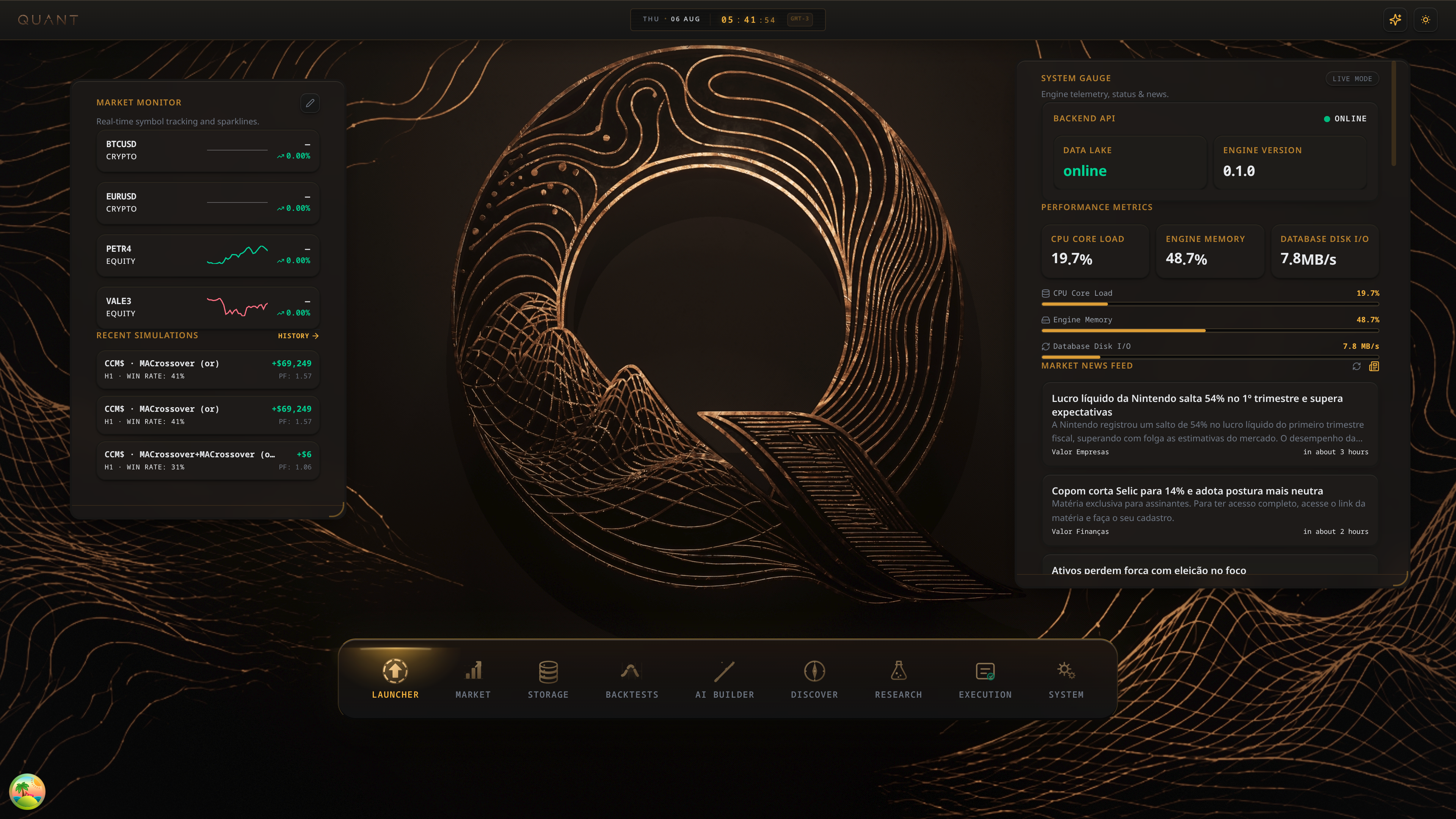
Built end to end as one product
Quant crosses product, design, frontend, backend, data, and infrastructure boundaries. I owned them together so the workflow and architecture could evolve around the same research problem.
I also created the Q emblem in Blender and its presentation scene in Unreal Engine 5. Layered surfaces, restrained metallic accents, and clear hierarchy carry that identity into dense workspaces designed for long research sessions.
A six-year idea, rebuilt for disciplined research
My own systematic trading research exposed the limits of spreadsheets and disconnected scripts. I needed reusable data, consistent strategy definitions, repeatable simulations, structured parameter search, and a way to challenge promising results before capital was involved.
The idea is roughly six years old and is what led me to learn programming. I rebuilt it several times as my understanding of markets, architecture, research discipline, and product design grew. The implementation shown here is a new codebase begun in April 2026.
An earlier generation of my tooling supported a strategy I traded personally, growing approximately R$3,000 into R$90,000 over about one year. That result predates this implementation; it is origin context, not a forecast or evidence that Quant produced those returns.
From market context to inspectable experiments
Research starts with instruments, historical series, indicators, and data availability. Quant keeps those inputs close to entry and exit rules, parameters, and simulation settings so an experiment can be reconstructed instead of remembered.
Completed runs put the equity path, drawdown, trades, and supporting statistics beside the assumptions that produced them. A promising chart remains tied to a specific configuration rather than becoming an isolated screenshot or headline metric.
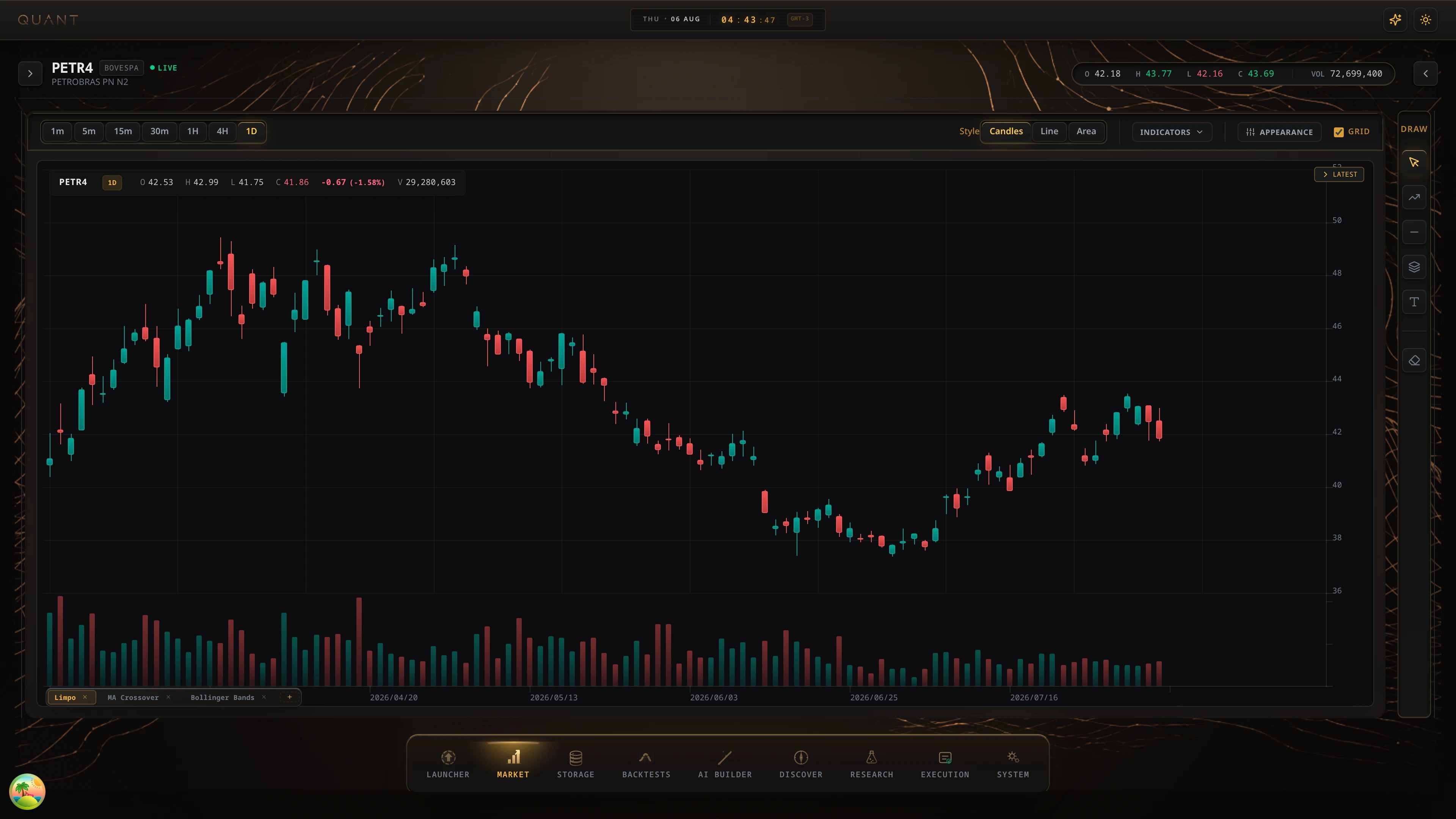
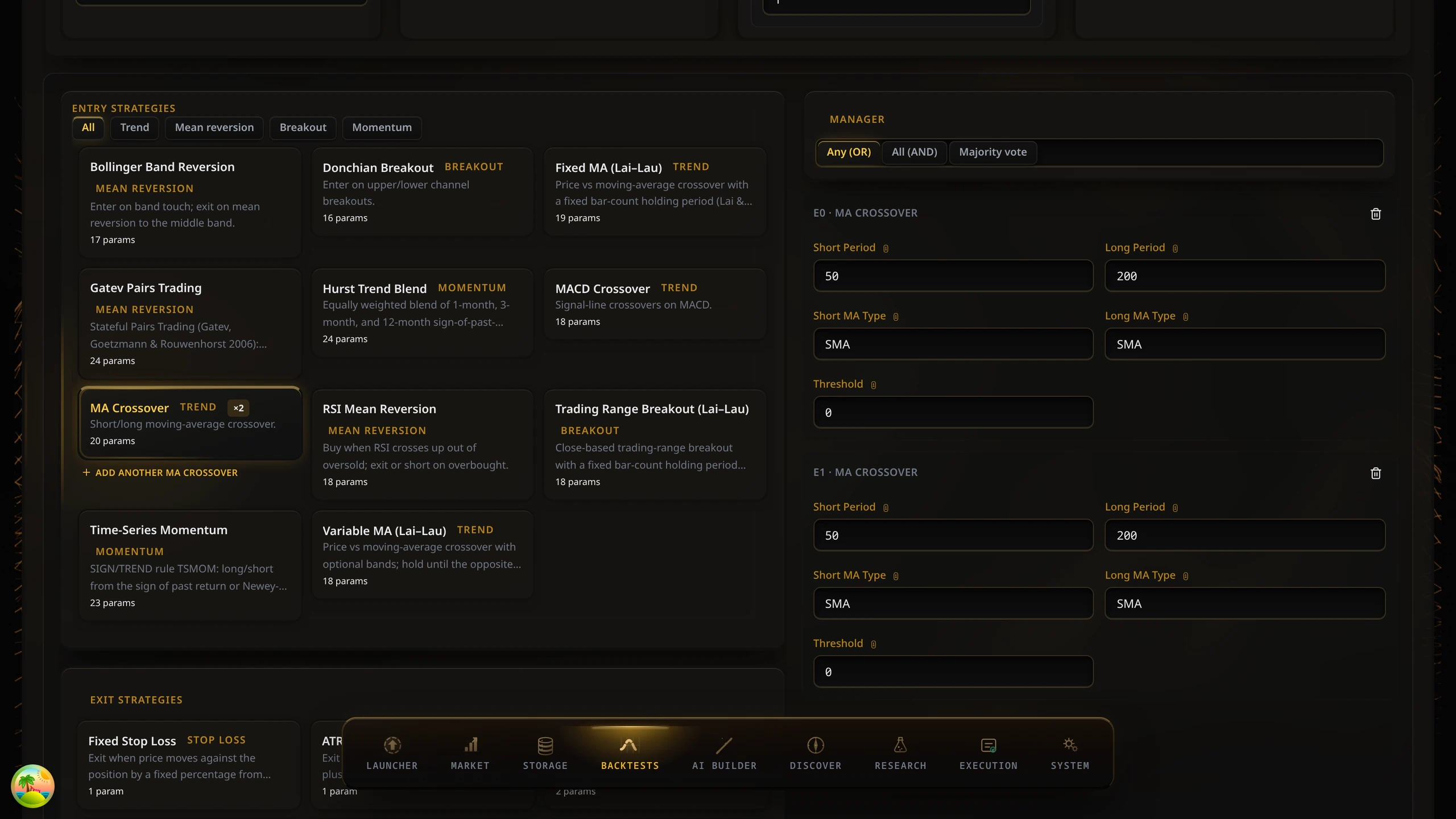
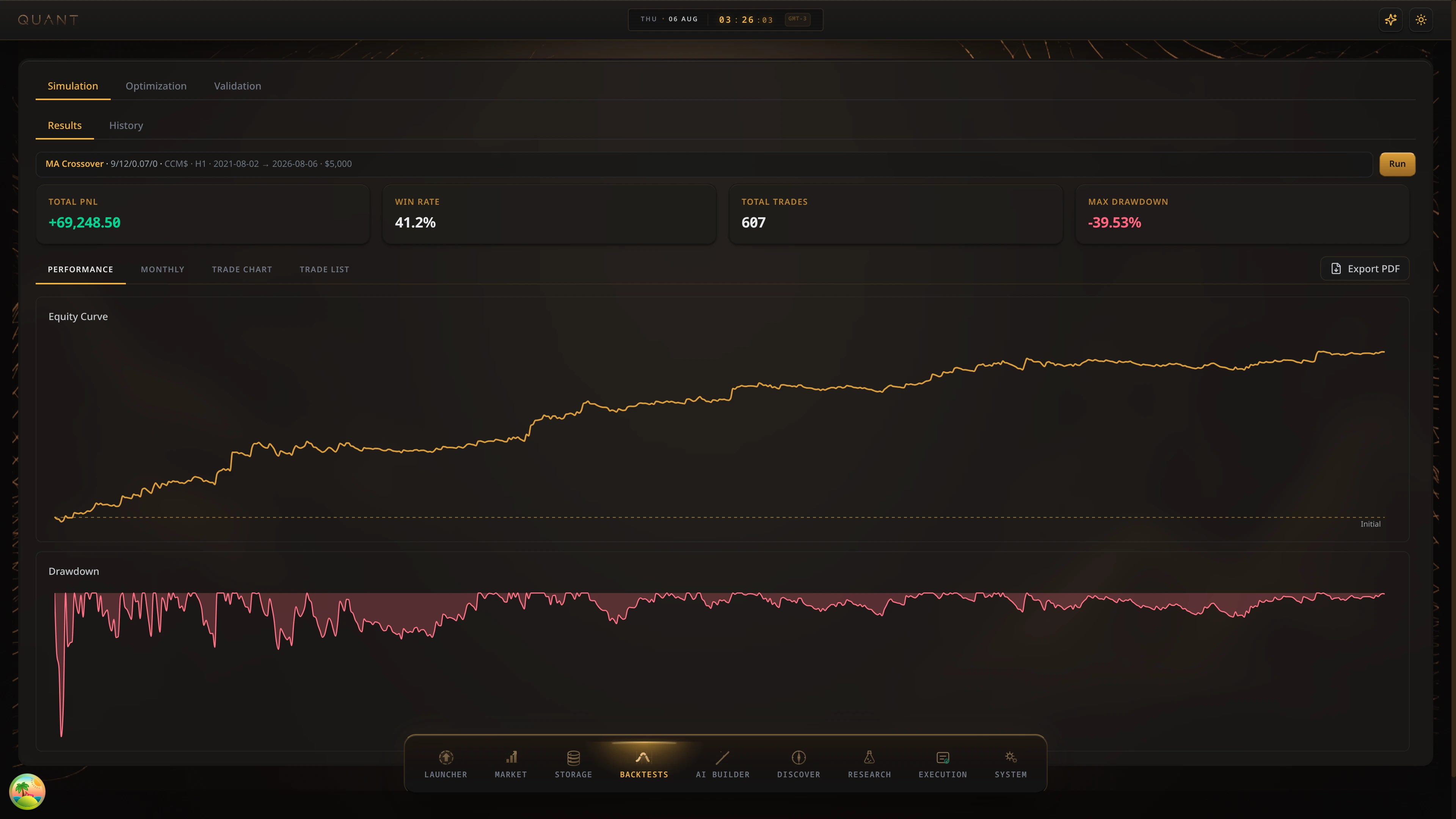
Challenge results before trusting them
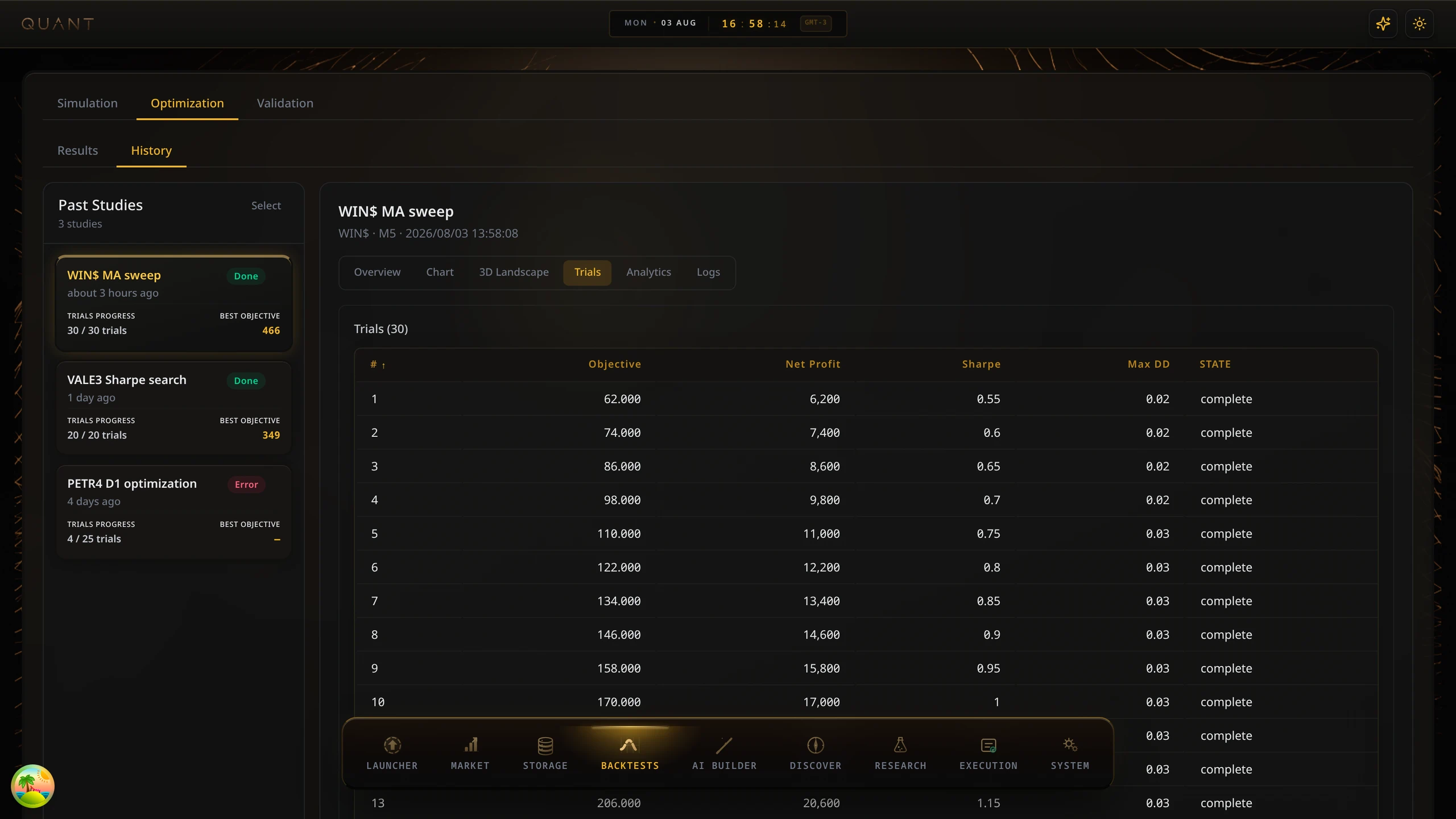
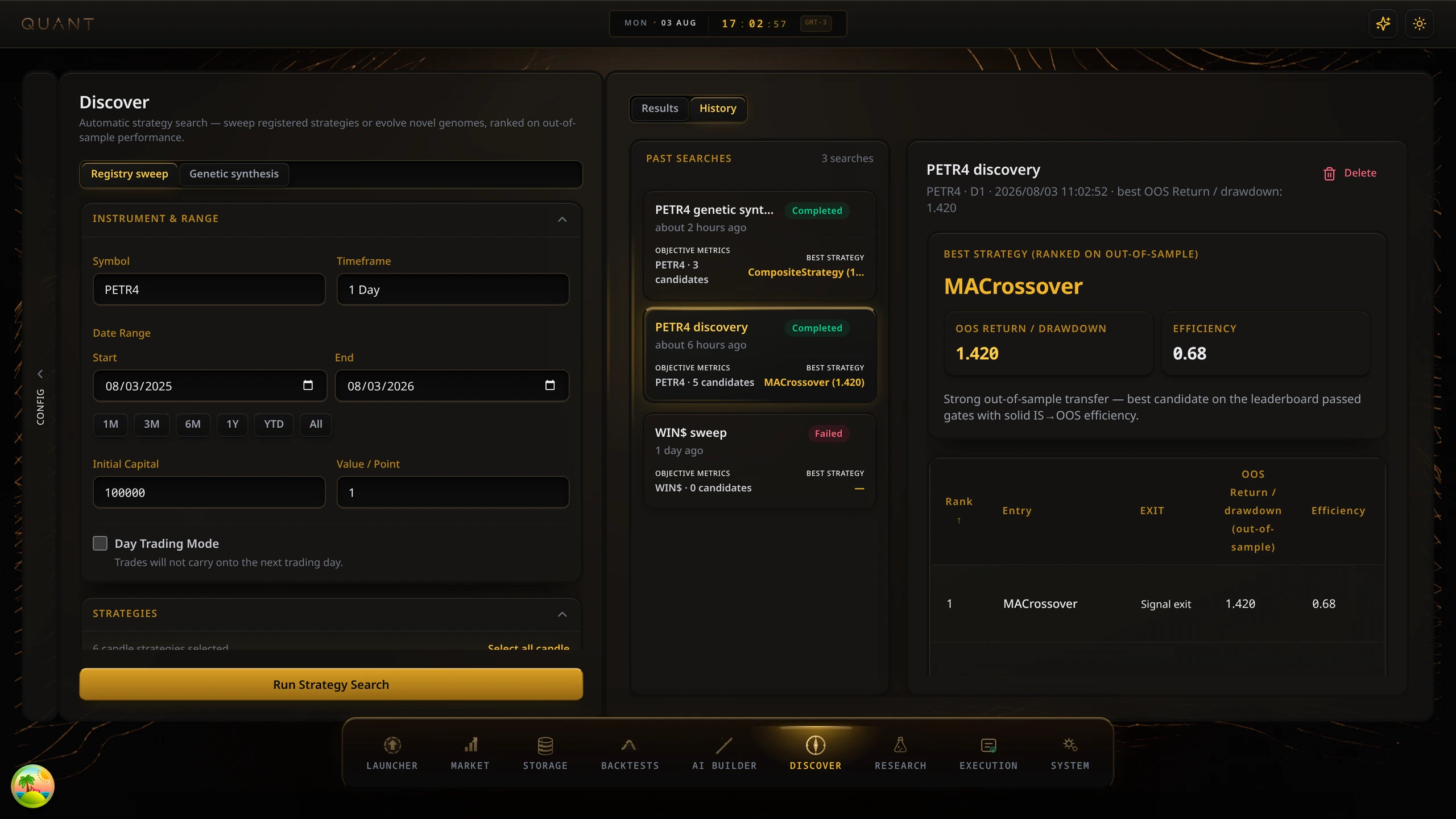
A useful search process must do more than surface the highest number. Optimization compares trials across multiple objectives, while discovery narrows broader candidate sets into work worth deeper investigation.
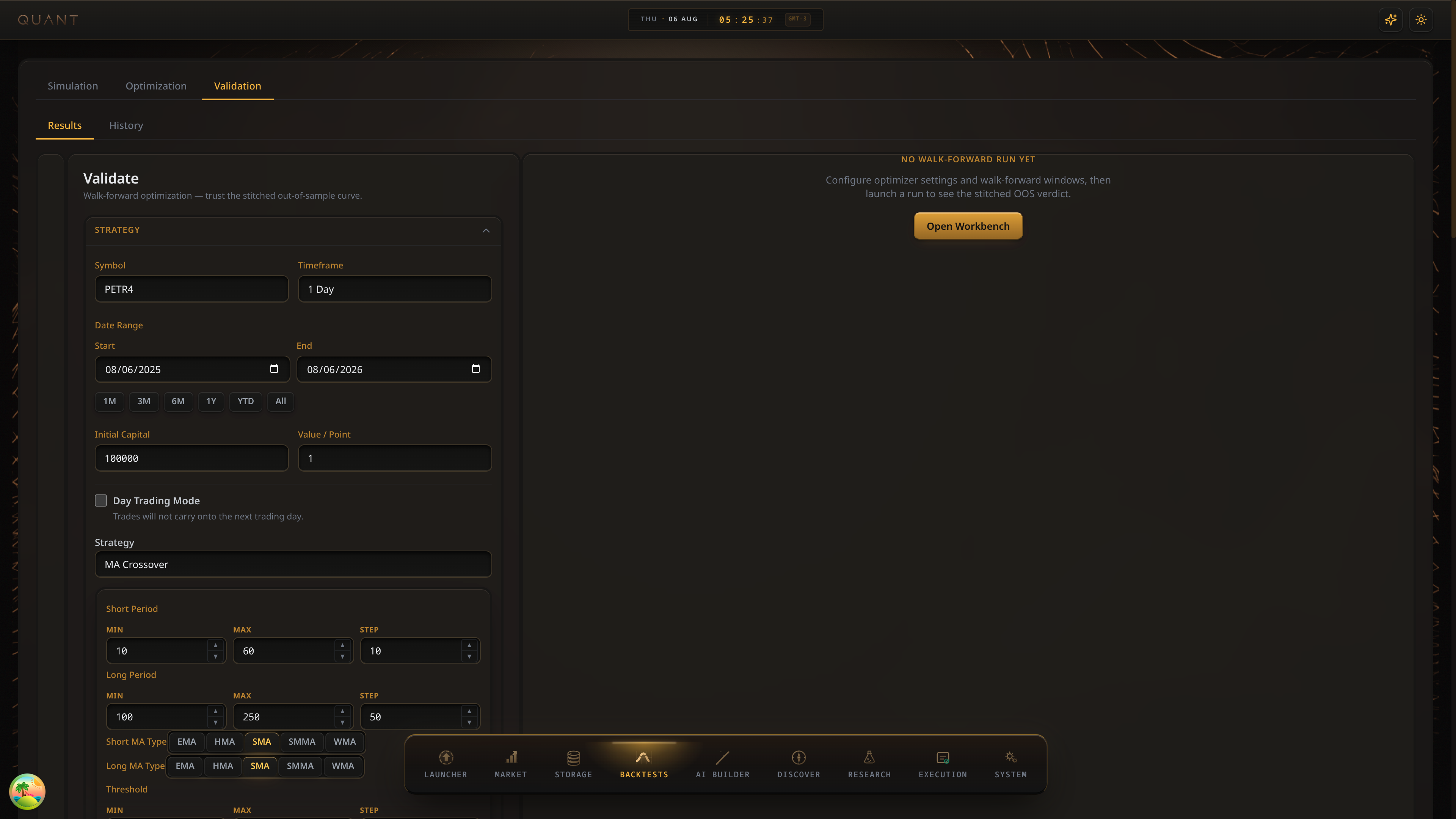
Validation stays inside the Backtests workflow and separates in-sample from out-of-sample windows. Feature creation, simulation performance, and held-out evidence remain distinct questions instead of collapsing into one score.
Keep heavy research work off the interaction path
Backtests, optimization studies, and discovery searches can outlive an HTTP request. Quant accepts work through the API, runs it in Dramatiq workers backed by Redis, and reports job state through the desktop shell so the interface can stay responsive.
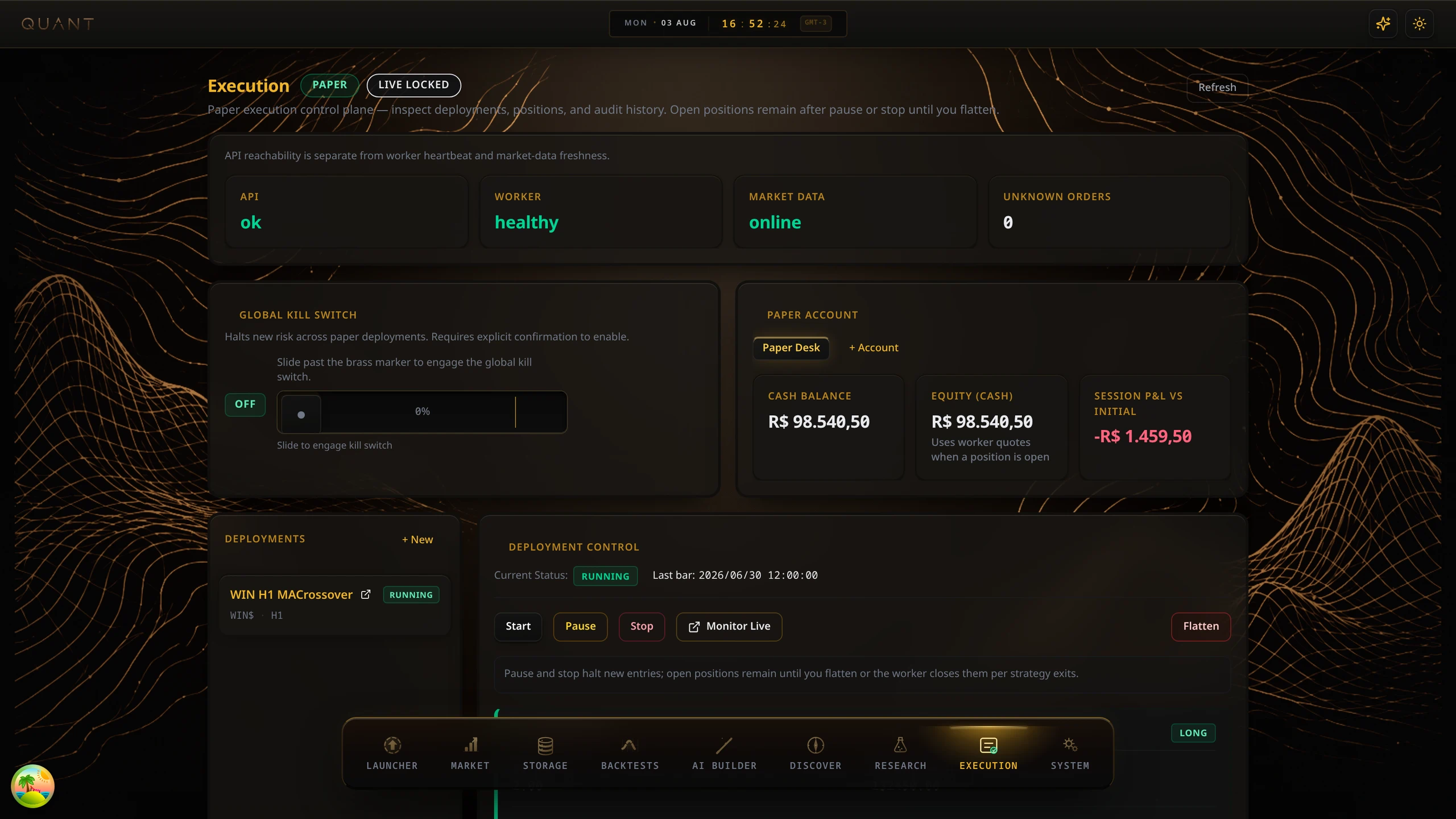
Execution is deliberately narrower than the research stack: the product supports paper accounts and paper deployments today. Live trading is rejected by both the interface and the API, turning the current safety boundary into visible product behavior.
A native product around asynchronous services
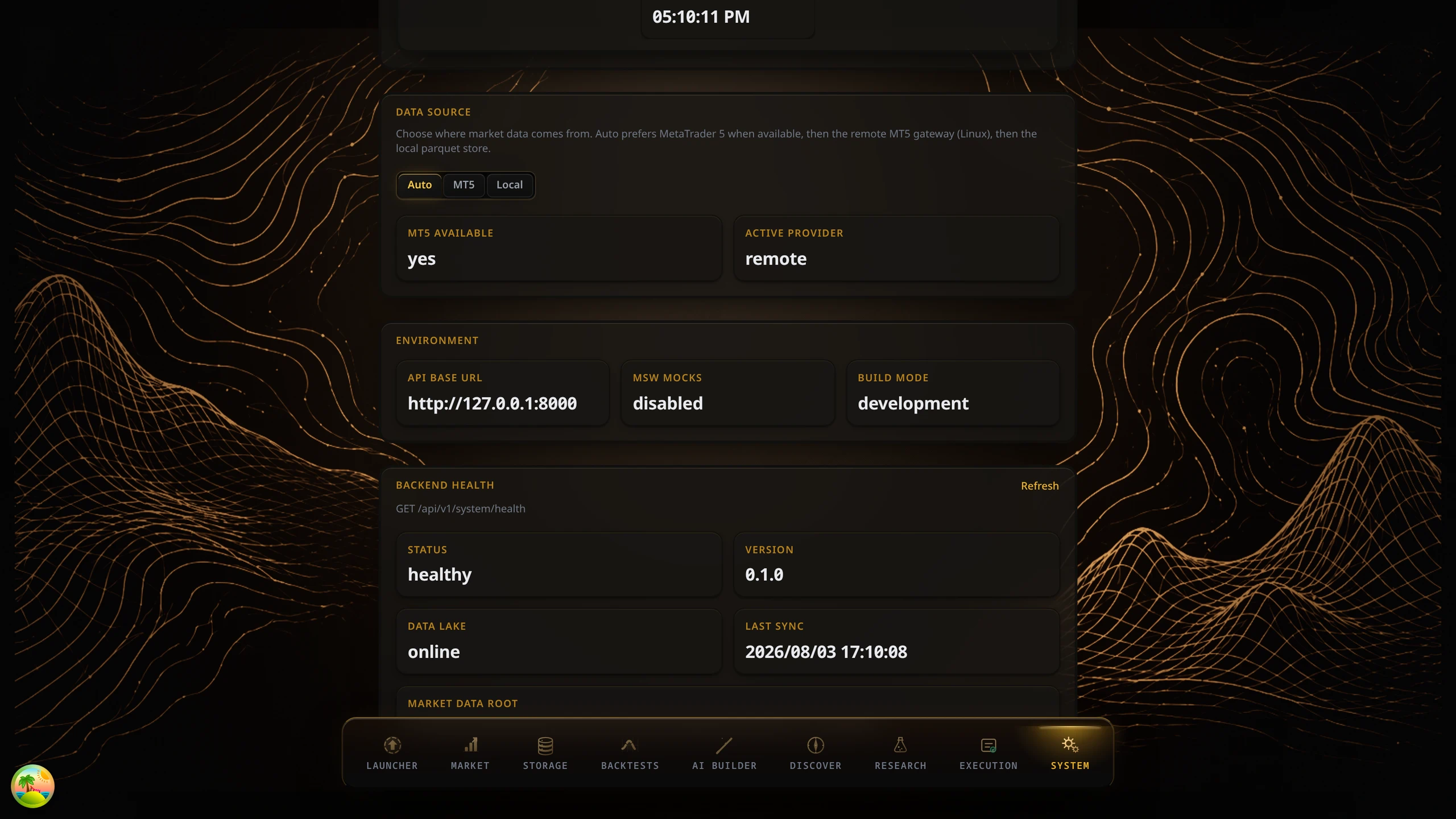
Quant packages a React interface inside Tauri 2 and connects it to FastAPI. PostgreSQL and Alembic manage application state; Redis and Dramatiq coordinate asynchronous research; MetaTrader 5 and a separate read-only gateway feed market data into local storage.
The desktop owns interaction; services own durable data and compute-heavy work. That boundary keeps long-running research out of the UI process without fragmenting the product.
How the stack nests
- Tauri desktop shellNative desktop host for the research console
- React SPAWebview interface talking to the local API
- FastAPI serviceHTTP API surface for the desktop console
What the API depends on
- PostgreSQLApplication schema through Alembic migrations
- Redis queueJob queue for asynchronous research workDramatiq worker poolBacktests, optimization, walk-forward, and discovery
- Market-data ingestionLands in local storage the research workspaces read
- MetaTrader 5 boundaryRead-only gateway; paper execution, live trading locked
Why desktop was the right boundary
Quant belongs beside local market-data services, workers, and research files. A native Tauri shell makes that operating context explicit and supports a focused desktop workflow instead of pretending the product is a public SaaS.
The trade-off is a native toolchain and platform-specific dependencies. I accepted it because it fits how the product is actually used.
Develop against stable fixtures
I built a deterministic Mock Service Worker mode that runs the interface without FastAPI, PostgreSQL, Redis, or a broker connection. Stable fixtures let product design, frontend behavior, and visual review continue while service contracts were changing.
This reduced coordination between interface and infrastructure work and made important states reproducible instead of dependent on a particular local stack.
Make validation and execution safety product constraints
A single backtest can reward overfitting, so Quant keeps optimization, held-out validation, and execution controls in the product workflow. The software presents evidence and boundaries; it does not declare that a strategy is successful.
Paper-only execution and backend live-mode rejection apply the same principle operationally: future capability cannot accidentally appear as current capability.
What I owned
I conceived, designed, and built the product: its identity, desktop shell, interaction system, frontend workspaces, API, worker architecture, database schema, market-data paths, research workflows, execution controls, automated tests, and development tooling.
I used AI for scaffolding, refactoring, test generation, and review. Product direction, architecture, visual design, engineering trade-offs, and final decisions remained mine.
Technology across the stack
- Tauri 2
- React
- Vite
- FastAPI
- Dramatiq
- Redis
- PostgreSQL
- Alembic
- MetaTrader 5
- Optuna
- Mock Service Worker
- pytest
- Blender
- Unreal Engine 5
Current status and technical walkthrough
Quant is actively used for research and backtesting, with paper execution available and live trading intentionally disabled while the execution path matures.
The repository is private, and public materials omit credentials, broker and account details, deployment identifiers, and source code. I can walk through the product, architecture, and decisions in greater depth in a technical conversation.